Garbage Disposal Not Working: Reset, Unjam and When to Replace
If your garbage disposal is not working, cut the power, then match what you hear: humming means a jam, no sound means a reset or power issue, and leaks and slow drains have their own checks.
The Cobalt Hollow Team
November 21, 2026 · 7 min read
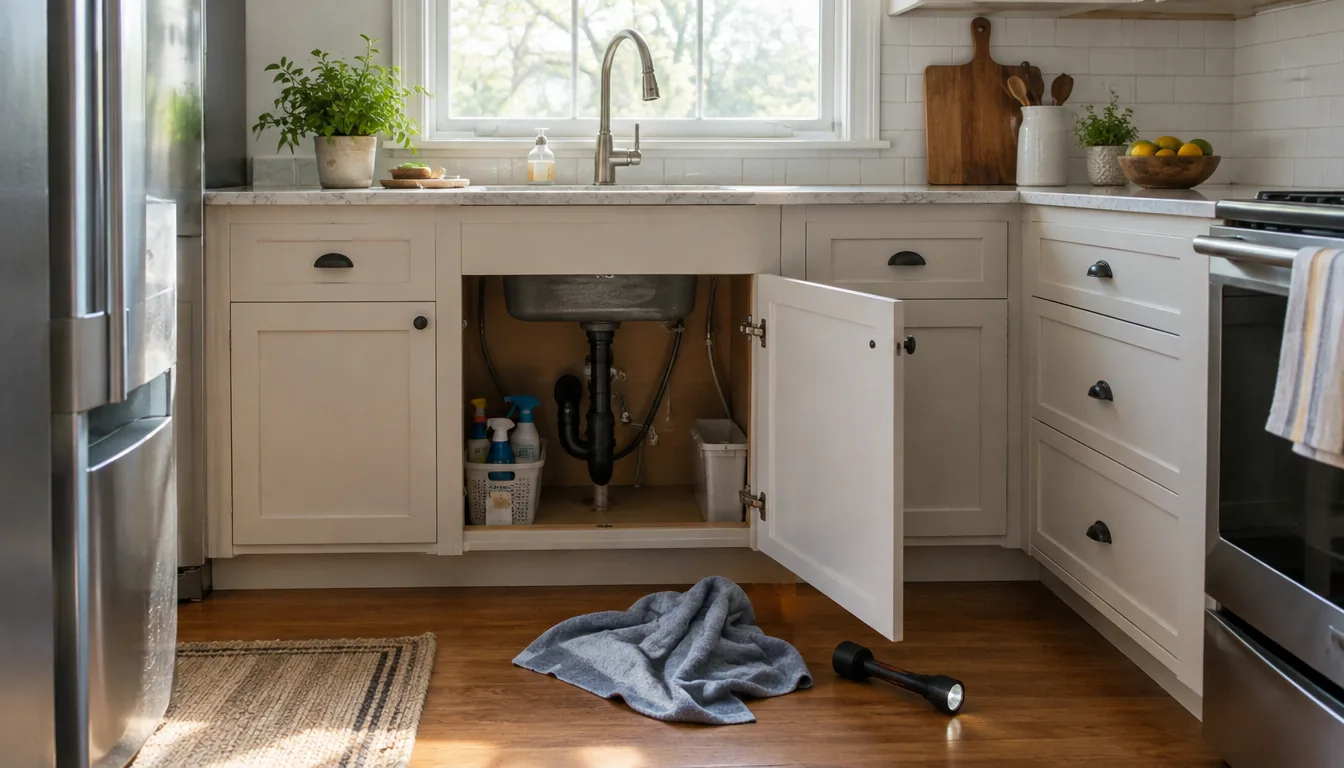
With a garbage disposal not working, turn off the switch and cut power at the plug or breaker first. Then match what you hear: a hum points to a jam, no sound at all points to a tripped reset button or lost power, and water sitting in the sink points to a clog downstream. Most of these checks use a hex key, a flashlight and tongs.
This guide is organized by what you see and hear, so you can go straight to your problem. Each section starts from the power-off step, because a hand does not belong in a grinding chamber, switched on or not.
Power-off steps before any garbage disposal repairs
Do these every time, whatever the problem.
- Switch the wall switch to off.
- Unplug the cord under the sink, or turn off the breaker if the unit is hardwired.
- Shine a flashlight into the opening and look for visible objects.
- Pull out anything you see with tongs or pliers, not your fingers.
- Follow the manual for your model, and ask an electrician if you find damaged wiring or a hardwired setup you are unsure about.
Keep the power off until you finish the step you are on and your hands are out of the sink and cabinet. If you need to turn the unit back on, the wall switch is the last thing to flip.
Match what you notice: a flowchart in table form
Use this table to pick the right section below.
| What you notice | Likely cause | First step |
|---|---|---|
| Humming, no spinning | Jammed grinding plate | Power off, turn the plate by hand with a hex key |
| No sound, no hum | Tripped reset button, breaker or loose plug | Check the outlet, then the breaker, then the red reset button |
| Spins but water will not drain | Clog in the drain line or trap | Check standing water and the pipes below |
| Water under the sink | Loose connection, worn seal or cracked body | Dry everything, run water and find the drip source |
| Loud metal clanging | Foreign object in the chamber | Power off, look inside with a flashlight |
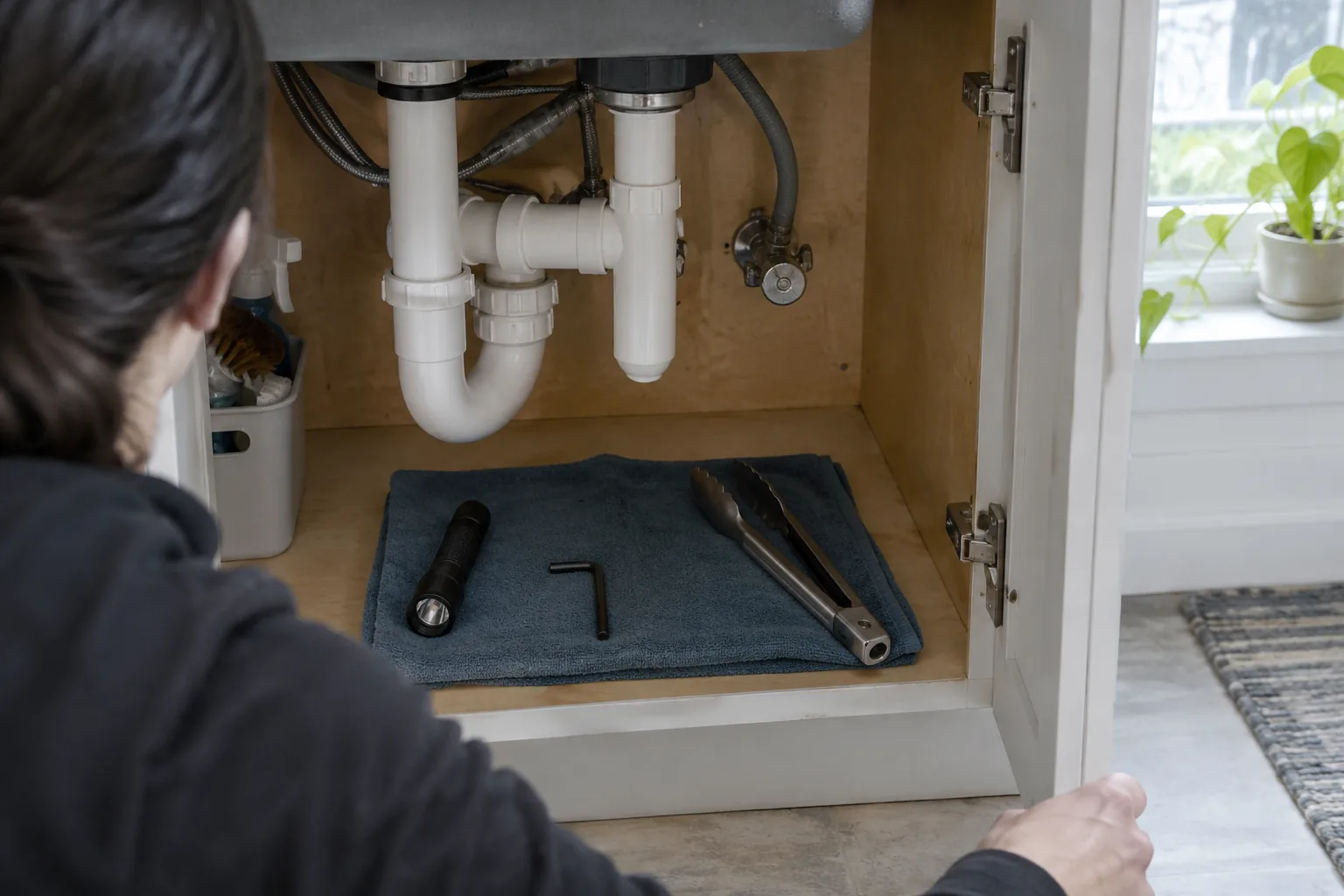
Garbage disposal humming but not working
A hum means the motor has power but the grinding plate cannot turn. A hard scrap, a bone, a fruit pit or a utensil is often wedged against it. If your unit has an overload sensor, the hum may fade after a short while.
How to unjam it by hand
- Power off at the switch, then unplug the unit or flip the breaker.
- Look through the opening with a flashlight and remove loose objects with tongs.
- Find the hex socket in the center of the underside of the unit, reached from inside the cabinet. Insert a hex key and work it back and forth until the plate turns through a full rotation.
- If your unit has no socket, press a wooden spoon handle against a lug inside the chamber and push it around.
- Remove what came loose, then press the red reset button on the bottom of the unit.
- Restore power, run cold water and switch it on.
If it hums again, power it off and look for a second object. A plate that will not turn at all can mean a seized motor, which is a case for a plumber or a replacement.
Garbage disposal not working and making no sound
No hum and no spin point to a power problem. Work from the outlet toward the unit.
- Try the wall switch twice, then confirm the breaker has not tripped.
- Look under the sink and confirm the cord is fully seated in the outlet. Some kitchens have a ground-fault outlet with its own reset button; press it.
- Wait 15 minutes if the unit just ran hard, since an overheated motor may need to cool before the reset button will stay in.
- Press the red reset button on the underside. It should click and stay in.
If you have no reset button, or it keeps popping out, overload protection may be responding to a jam, so unjam it first. A button that will not stay in after you clear the jam, or a breaker that trips again, calls for an electrician.
Field note
Press the reset button only with the power off and the chamber empty. Restore power afterward, and if the breaker trips again, stop and call an electrician.
Slow drains, standing water and leaks
If the motor runs but standing water stays in the sink, the clog is past the grinder. Look at the drain line, the trap and the connection to the dishwasher.
Unclog a garbage disposal with standing water
- Power off the disposal so it cannot start while you work.
- Remove loose debris you can see with tongs.
- Use a cup plunger over the drain opening, with the other side of a double sink blocked, and plunge steadily.
- If water still sits, place a bucket under the trap, loosen the slip nuts and clear the trap and the pipe by hand.
- Reassemble, run water and check each joint for drips.
Also check the dishwasher drain hose where it meets the disposal. On a new installation, the knockout plug inside the inlet may still be in place. A chemical drain cleaner can damage some parts, so follow the manual before using one.
Vinegar and baking soda can freshen a sink with a food odor, but they do not clear a solid clog. Use them as cleaning, then flush with cold water.
Finding a leak
Dry the cabinet and pipes, then run water while you watch each joint. A paper towel held under each connection helps you spot the exact point.
- Top flange or sink seal: tighten the mounting ring or replace the gasket.
- Dishwasher or drain hose: tighten the clamp.
- Drain pipe joint: tighten the slip nut or replace the washer.
- Unit body or bottom: a leak from the housing means the internal seal has failed, and replacement is the usual answer.
If water is near the electrical connection, power the unit off at the breaker and ask a plumber or electrician before you touch it. For more on the fittings that carry water around a home, see What Is a Hose Bib?, which explains an outdoor plumbing fitting.
Loud metal noise and what the inside looks like
A metallic clank is often a foreign object, such as a spoon, a bottle cap or a jar lid ring, hitting the shredder. Power off, then pull it out with tongs.
Inside, the grinding chamber holds a spinning plate with two small swinging lugs, and a stationary ring with teeth around the wall. Disposals do not use sharp blades the way a blender does. Food is forced against the ring and washed through the openings below. Dull-sounding grinding can point to worn parts or residue build-up, not a blade you can sharpen.
A deep growl, a rattle with an empty chamber or a wobbling unit can point to worn bearings or loose hardware. Check the mounting ring under the sink, and consider replacement if the sound continues.
When to replace instead of repair
Repairing fits jams, resets, clogs and loose connections. Replacement is worth considering when:
- The housing leaks.
- The plate will not turn even after you clear everything.
- The reset button keeps tripping with an empty chamber.
- Loud grinding or rattling continues after you check the mounting.
- The unit has been in service for many years and problems keep returning.
Lifespan varies with how a unit is used and what goes into it, so there is no fixed number to rely on. A pattern of repeat problems says more than age alone.
If you do replace it, ScrapSweep is a continuous-feed garbage disposal that mounts under a kitchen sink drain. It has a 3/4 HP motor, two grinding stages and sound dampening built into the housing. An overload sensor cuts power when the grinder jams, so you clear the chamber, reset the unit and carry on. The box includes the disposal unit, a pre-attached power cord, a splash guard and sealing gasket, an installation accessory kit and a user manual. Browse more in Sink Fixtures & Accessories.
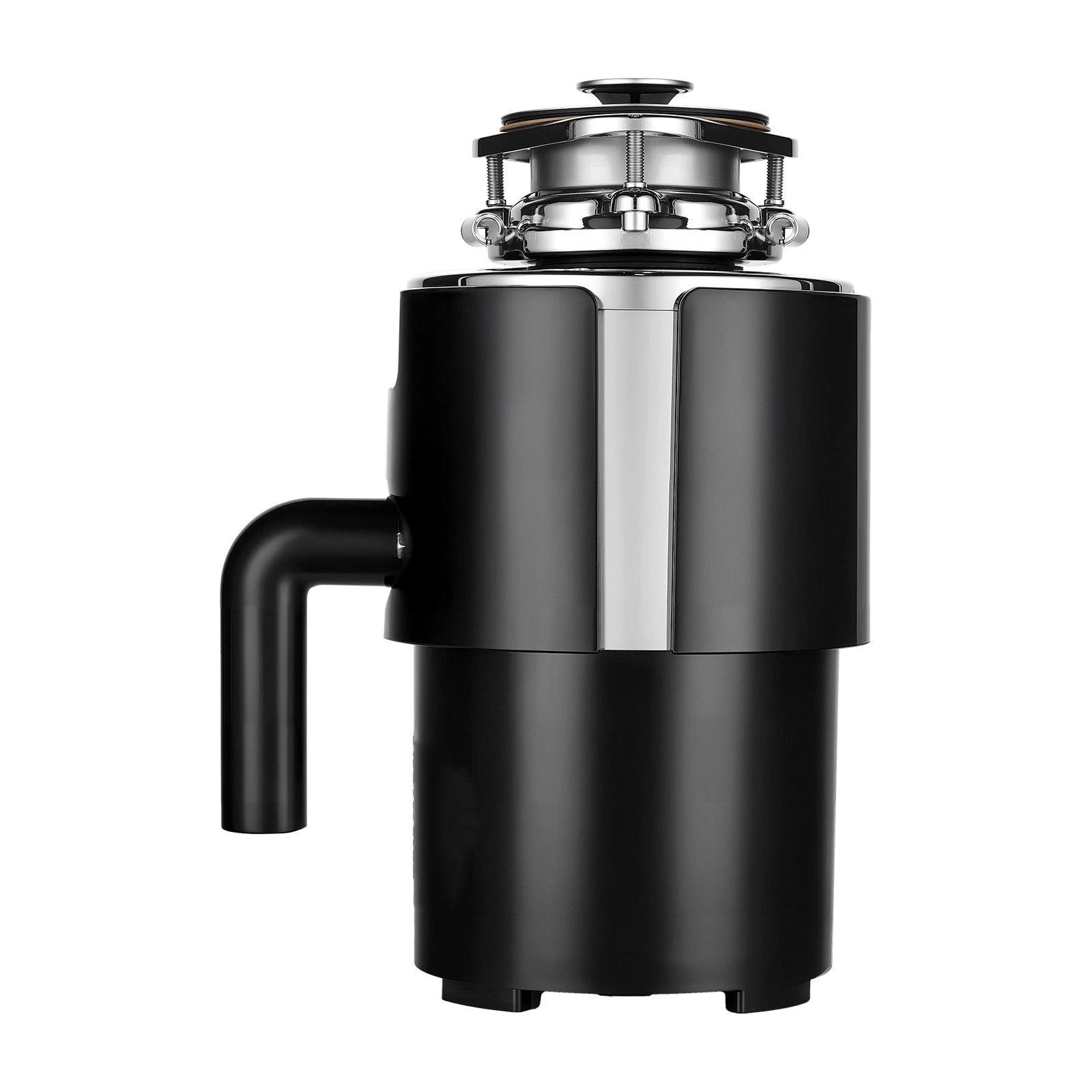 In this guideScrapSweep$359.99View
Living without a disposal, and care habits
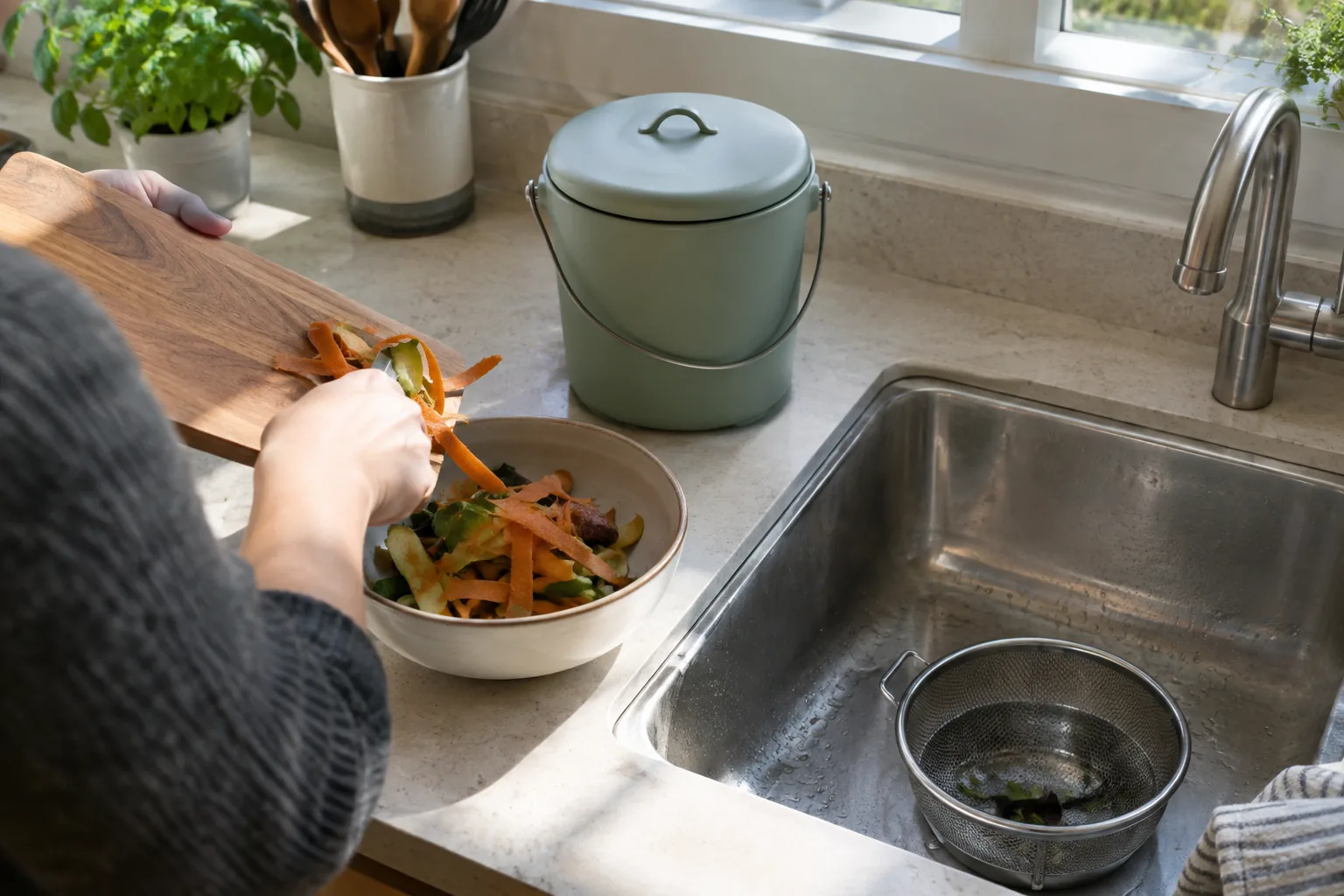
If yours is out of service while you wait for a fix, a mesh drain strainer catches small scraps; empty it after each use.
- Scrape plates into the trash or a compost bin before washing.
- Wipe greasy pans with a paper towel before washing them.
- Keep a lidded container on the counter for peels and coffee grounds.
Once it runs again, a few habits help. Run cold water before, during and after grinding, and feed scraps a little at a time. Keep bones, fruit pits, fibrous stalks, grease, bulk coffee grounds and non-food items out of the unit, and check the manual for what your model accepts. Clean the splash guard with a brush and dish soap while the power is off.
Like a seasonal job such as gutter cleaning, a short routine keeps small jobs small. Whenever a garbage disposal not working comes down to a jam, a power trip or a downstream clog, cut the power, match what you hear and work through the steps in order. If you cannot find the cause, a plumber or electrician can take it from there.