Recommended Juicer Machine Types: Masticating vs Centrifugal
A recommended juicer machine is the type that matches your produce and your patience for cleanup. Compare masticating and centrifugal juicers side by side, then pick with a short checklist.
The Cobalt Hollow Team
October 27, 2026 · 8 min read
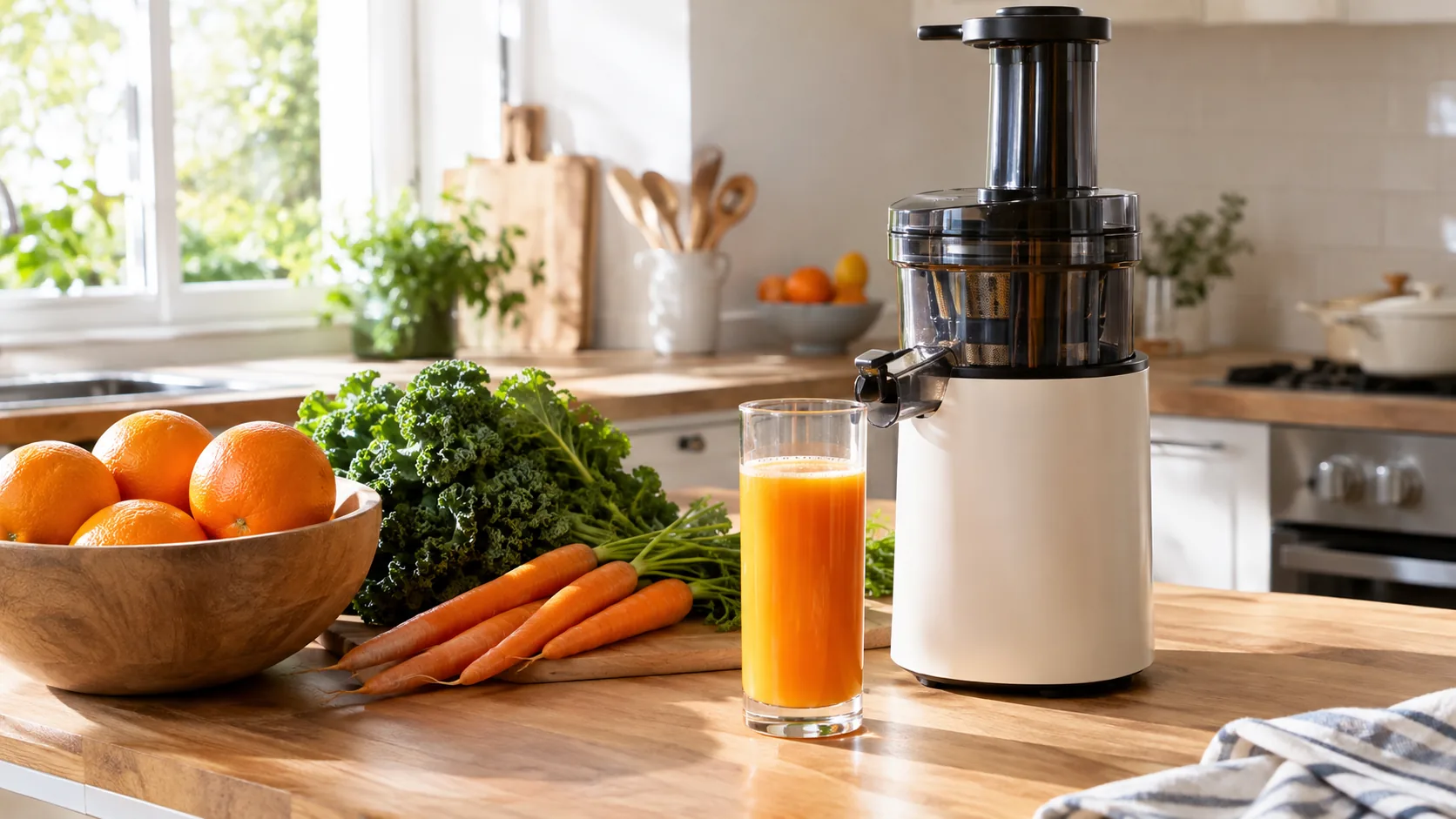
A recommended juicer machine is the type that fits what you juice and how much cleanup you will do. Masticating (slow, auger) juicers press produce and suit leafy greens and soft fruit, while centrifugal (fast) juicers shred produce on a spinning blade and suit whole apples, carrots and firm vegetables. This guide compares the two by yield, speed, cleanup and produce types instead of ranking brands.
Use the table first, then the decision steps further down.
Masticating vs centrifugal at a glance
| Feature | Masticating (slow, cold press) | Centrifugal (fast) |
|---|---|---|
| How it extracts | A rotating auger crushes and presses produce against a screen | A blade shreds produce in a fast-spinning basket and spins juice out |
| Yield | Varies by model and produce; look at how dry the pulp in the bin is | Varies by model and produce; some cooks run wet pulp through a second time |
| Speed | Slow auger; produce is fed in smaller pieces | High rotation speed; wide chutes take larger pieces |
| Cleanup | Auger, screen and juicing chamber to scrub | Basket, blade and pulp container to rinse |
| Produce types | Leafy greens, herbs, wheatgrass, berries, soft fruit | Apples, carrots, beets, celery, other firm produce |
| Extras | Some models make nut milks or mince | Check the model's function list |
| Footprint | Tall (vertical) or long (horizontal) | Wide base with a chute and a pulp bin |
Neither type fits every kitchen. The right choice depends on the produce you buy most often and how much chopping and washing you accept.
How each juicer type works
Centrifugal juicers
A centrifugal juicer drops produce onto a flat cutting blade inside a mesh basket. The basket spins at high speed, and the force pushes juice through the mesh while pulp stays behind. A wide feed chute lets you load whole apples with little cutting.
This design suits firm, watery produce. Leafy greens and herbs tend to wrap or slide past the blade, so you may need to feed them between pieces of firmer produce.
Masticating juicers
A masticating juicer uses a slow-turning auger, a screw that crushes produce and presses it against a screen. Vertical models stand upright and feed by gravity, while a horizontal juicer lays the auger on its side and suits greens, wheatgrass and herbs. The chute is often narrow, so plan on chopping produce into strips or chunks.
Slow juicers come with a few extra parts: a juicing chamber, a screen, a pusher and often a cleaning brush. Count them before you buy, because each one is something to wash.
Twin-gear (triturating) juicers
A less common slow-juicer subtype uses two interlocking augers, called twin-gear or triturating juicers. They are a variation on the masticating idea and often come with more parts to assemble and wash. Read the manual to see how the gears and screen fit together before you decide.
What cold press means
The label cold press appears on slow models. It describes the pressing action, not a separate machine type, so a cold press juicer machine is a masticating juicer. Check the product page for what the model actually includes.

Match the juicer to your produce
Start with what is in your fridge, not with a feature list. The table pairs common produce with the style that handles it.
| Produce | Masticating | Centrifugal | Note |
|---|---|---|---|
| Apples, pears | Cut into pieces | Whole in a wide chute | Core and seed handling varies; check the manual |
| Carrots, beets | Chopped pieces | Suits carrot juice | Scrub roots before juicing |
| Kale, spinach, herbs | Suited to green juice | Feed between firm pieces | Roll leaves into a bundle |
| Oranges, grapefruit | Peel first | Peel first | A dedicated citrus juicer or hand press suits halved citrus |
| Berries, grapes | Suited to soft fruit | Juice may spray | Rinse and remove stems |
| Celery, cucumber | Cut into lengths | Feed through the chute | Trim ends and rinse |
Oranges and other citrus
If orange juice is the main goal, a citrus reamer or a hand press does the job for halved citrus and has few parts. An orange juicer machine with a reamer cone fits that single task. A multi-purpose juicer makes sense when you also juice vegetables and want one appliance for both.
Whole fruits and vegetables
If you want to juice whole fruits without chopping, the chute is the feature to check. Wide chutes take whole apples; narrow ones need pieces. Hard items such as beets and carrots may still need halving, so read the manual for size limits.
How to read a juicer spec sheet
Spec sheets list numbers without saying what they mean for your counter. Use this table to turn each line into a question you can answer from the product page and the manual.
| Spec line | What to check |
|---|---|
| Chute width | Whether a whole apple fits, or whether you must cut produce first |
| Speed settings | How many settings there are and which produce the manual assigns to each |
| Motor wattage | The figure is a power rating of the motor; compare it only within the same juicer type |
| Parts list | How many pieces come apart, and which ones touch the juice |
| Run-time limits | Whether the manual lists a maximum running time or rest period between batches |
| Dishwasher compatibility | Which parts the manual allows in a dishwasher and which need hand washing |
| Materials | What the juice-contact parts are made of, since that guides your cleaning tools |
| Container sizes | Whether the juice container and pulp bin hold enough for the batch you make |
A wattage figure does not describe results by itself. Chute width, blade or auger design and the produce you load all shape what comes out, so treat each line as one piece of the picture.
Choosing a recommended juicer machine: five steps
- List the five fruits and vegetables you would juice each week. Mostly firm produce points to centrifugal; mostly greens and herbs points to masticating.
- Measure the counter and cabinet space. Vertical slow juicers are tall, horizontal ones are long, and fast juicers need room for the chute and pulp bin.
- Check the chute width. A wide chute means you chop less before you load.
- Count the parts to wash. Fewer pieces and smooth surfaces give you less to scrub after each use.
- Read the manual details on speeds, run time and whether parts are dishwasher-compatible, since these differ by model.
Decide on the type first, then compare models inside that type. A fine screen or a long feed chute only matters once you know which style you need.
Quick decision table
| If this describes you | Lean toward |
|---|---|
| You juice apples and carrots and want little prep | Centrifugal with a wide chute |
| You juice kale, spinach or herbs most weeks | Masticating, vertical or horizontal |
| You want nut milks or mincing from the same machine | A masticating model that lists those functions |
| You only want orange or lemon juice | A citrus juicer or hand press |
| You have little cabinet space | Measure first; compare tall against wide bases |
A countertop option with a wide chute
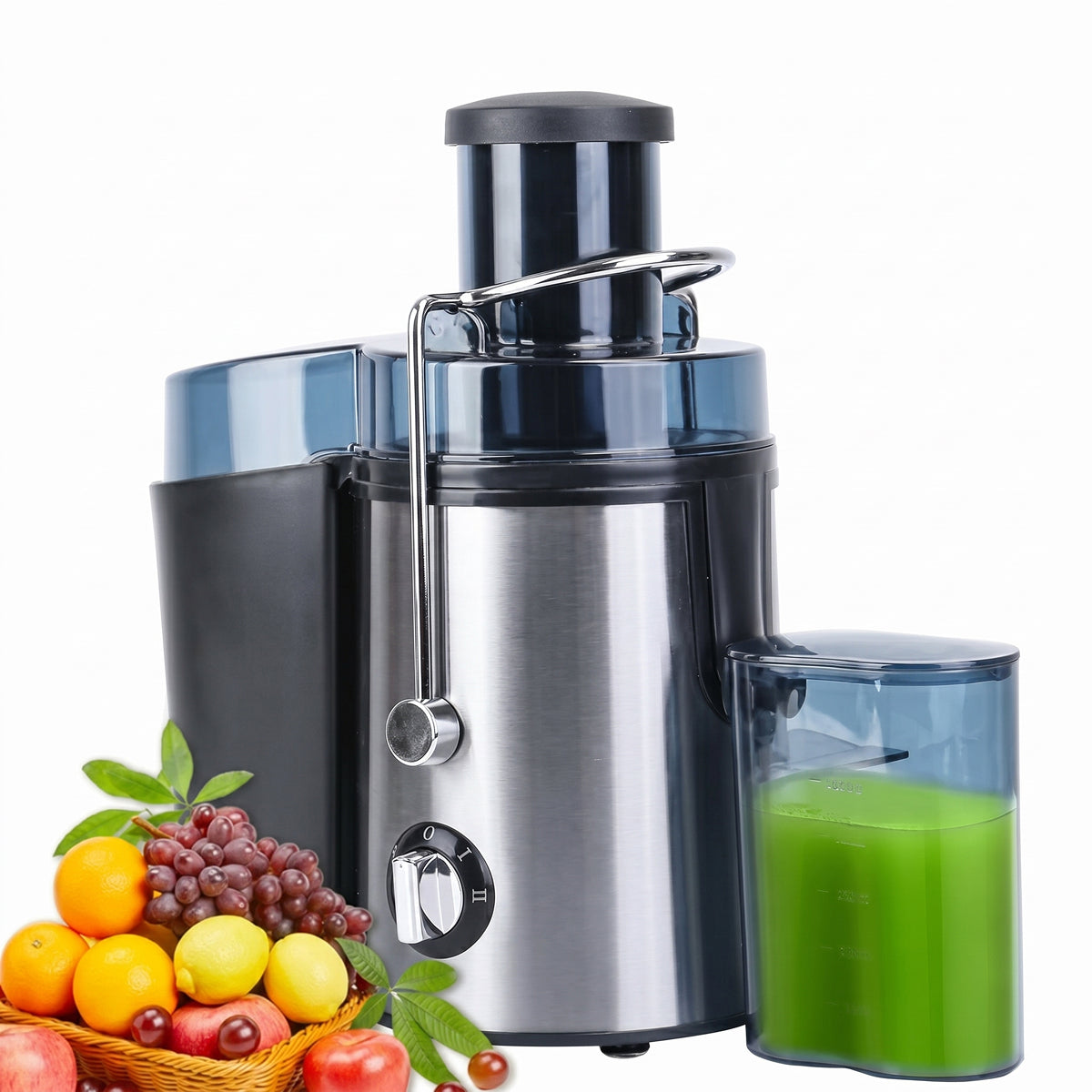
If your list is mostly apples, carrots and other firm produce, look at NutriPress. It is a countertop juicer machine with a 1000W motor, a wide feed chute and a stainless steel blade assembly. The chute is sized for whole apples and firm vegetables, so you load produce with little or no cutting beforehand.
You choose one of three speed settings for different produce, collect juice in the container, and pulp goes to the bin. The box includes the 1000W juicer base, the blade assembly, a juice collector container and a large pulp bin. Check its chute and blade assembly against your produce list the same way you would any other model.
 In this guideNutriPress$159.99View
Setup and cleanup routine
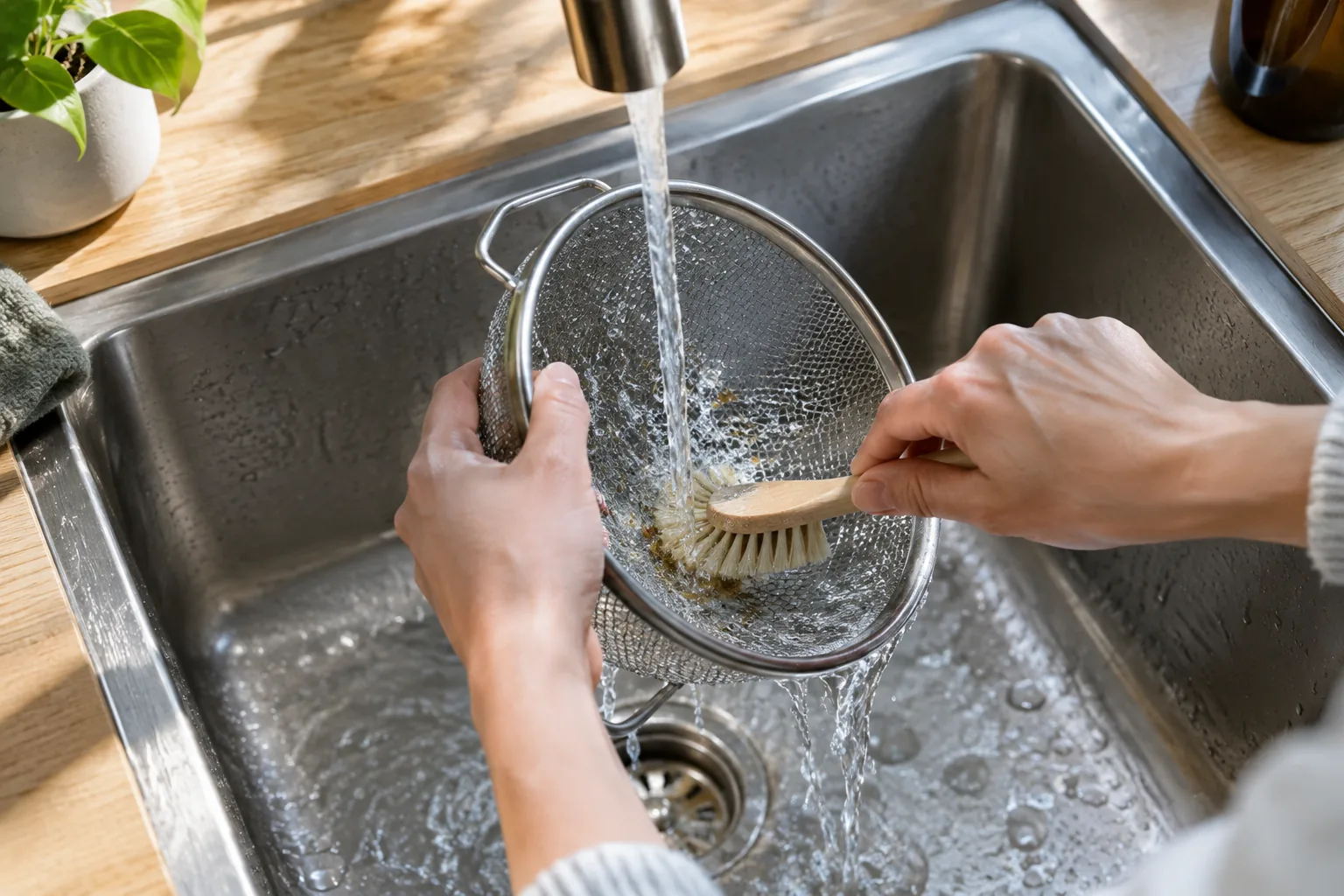
Cleanup decides whether a juicer stays on the counter or ends up in a cabinet. Rinse parts right after juicing, before pulp dries onto the mesh or screen.
- Unplug the base before you touch any part.
- Empty the pulp bin and the juice container.
- Detach the removable parts and rinse each one under running water.
- Use a cleaning brush on screens and mesh, working from the inside out.
- Dry the parts and store them apart from the base.
On NutriPress, the parts that touch juice are food-grade stainless steel and the blade assembly is a metal part, so wash it by hand and dry it after use. Follow the manual for any model you own, and ask an electrician if an outlet looks damaged.
A simple schedule
| When | Task |
|---|---|
| After every use | Empty the bin, rinse parts, dry them |
| Weekly | Brush the screen or mesh and wipe the base with a damp cloth |
| Before storing | Check that every part is dry and keep the cord clear of the base |
Do not submerge the base; wipe it with a damp cloth instead.
Field note
Juice the soft or leafy produce first and the firm produce last. The firm pieces help move remaining pulp through the machine; follow your manual's feeding order if it gives one.
Pros and cons of juicing at home
Judge a juicer on practical points. Here is what to weigh in practical terms.
- Pro: you control the ingredients and can mix fruit and vegetables to taste.
- Pro: a juicer handles produce that is soft or bruised and still usable.
- Pro: pulp can go to compost or into recipes such as muffins and broth.
- Con: it takes a lot of produce to fill one glass, so grocery spending is a factor.
- Con: parts need washing each time, so plan the cleanup before you start.
- Con: machines take counter or cabinet space.
Juicer or blender
A blender keeps the whole fruit in the drink, while a juicer separates the pulp. If you only blend whole fruit, a blender may cover what you need. Our guide to blenders for smoothies explains power, jar and blade choices, and Blender vs Food Processor sorts out which kitchen tasks suit which machine. The Blenders, Mixers & Prep Tools collection has related kitchen gear.
Common mistakes when buying a juicer
- Buying a slow juicer, then skipping it because chopping takes too long.
- Buying a fast juicer for a kitchen where kale and herbs are the main produce.
- Ignoring the parts count, then leaving the machine unwashed.
- Overfilling the chute. Feed produce steadily and follow the manual.
- Leaving produce unwashed. Rinse and scrub everything, and trim any damaged spots.
- Skipping the size check, then finding the machine does not fit under the cabinets.
Pick the type that matches your weekly produce, confirm the cleanup routine is realistic, and you will have a recommended juicer machine for your own kitchen.