How to Clean Mushrooms: Brush, Rinse or Spin by Variety
Brush or wipe smooth cultivated mushrooms, rinse ridged or dirty ones briefly, then dry them well. This guide matches the method to each variety, including kit-grown mushrooms.
The Cobalt Hollow Team
November 12, 2026 · 6 min read
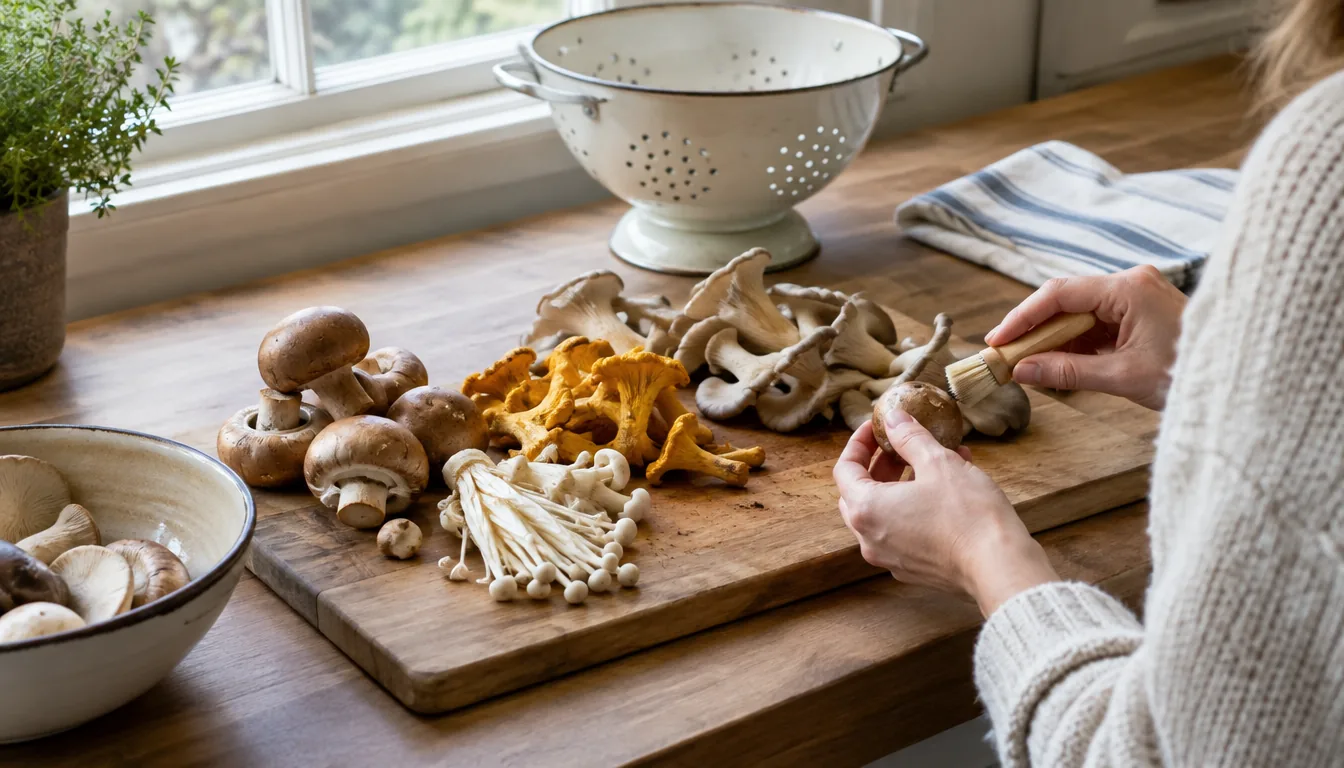
To learn how to clean mushrooms, start with the surface: brush or wipe smooth cultivated mushrooms, give ridged or visibly dirty ones a brief rinse, and dry everything before it hits the pan. Water is not the enemy, but extra water is. Whatever method you pick, the goal is to remove dirt and leave the mushrooms dry enough to brown.
Below you will find a method for each variety, a step-by-step brushing and rinsing routine, a way to spin them dry, and notes on kit-grown mushrooms.
Do mushrooms need to be rinsed before cooking?
Not always. Mushrooms that look clean, with a dry cap and only a little soil on the stem, need a soft brush or a damp paper towel and nothing more. Mushrooms with visible grit, gills packed with debris, or a dirty stem base can take a short rinse.
The reason to be careful is moisture. Wet mushrooms release water in the pan and tend to steam rather than brown. That is why the wash-or-not debate exists, and why the real answer is: wash when needed, then dry thoroughly.
Use this rule of thumb: the cleaner they look, the less water they need. If you plan to cook them in a very hot, dry pan, dryness matters more. If they go into a soup or braise, a short rinse matters much less.
How to clean mushrooms by variety
Shape decides the method. Smooth caps wipe clean, while ridges, hollow stems and honeycomb surfaces trap dirt and need water or a gentle swish.
| Variety | Main method | Notes |
|---|---|---|
| White button and cremini | Brush or wipe | Rinse briefly only if visibly dirty, then dry. |
| Portobello | Wipe cap, trim stem | Scrape out the gills if you want a cleaner look in the dish. |
| Shiitake | Wipe cap | Trim off the tough stem base; stems can go into stock. |
| Oyster | Brush, trim base | Cut away the woody base where the cluster joined. |
| Chanterelles | Brush, then short rinse | Ridges hold dirt; dry well afterward. |
| Morels | Cut in half, swish in cool water | Hollow insides need a look; drain and dry. |
| Porcini | Brush and trim with a paring knife | Scrape off any soil clinging to the stem. |
| Black trumpet | Slit open and rinse | The hollow trumpet traps grit. |
Cleaning chanterelles
For chanterelles, brush off loose soil first with a pastry brush or soft toothbrush. Then rinse them briefly under a gentle stream of lukewarm water, or swish them in a bowl, and lift them out rather than pouring the water over them so grit stays behind. Spread them on a towel or spin them dry before cooking.
Cleaning morels and other hollow varieties
Cut hollow mushrooms in half lengthwise so you can see inside. Swish the halves in a bowl of cool water, lift them out, change the water if it looks gritty, and repeat until the bowl stays clear.
If you forage, only eat wild mushrooms that an experienced local expert has identified. Cleaning does not tell you whether a mushroom is edible.
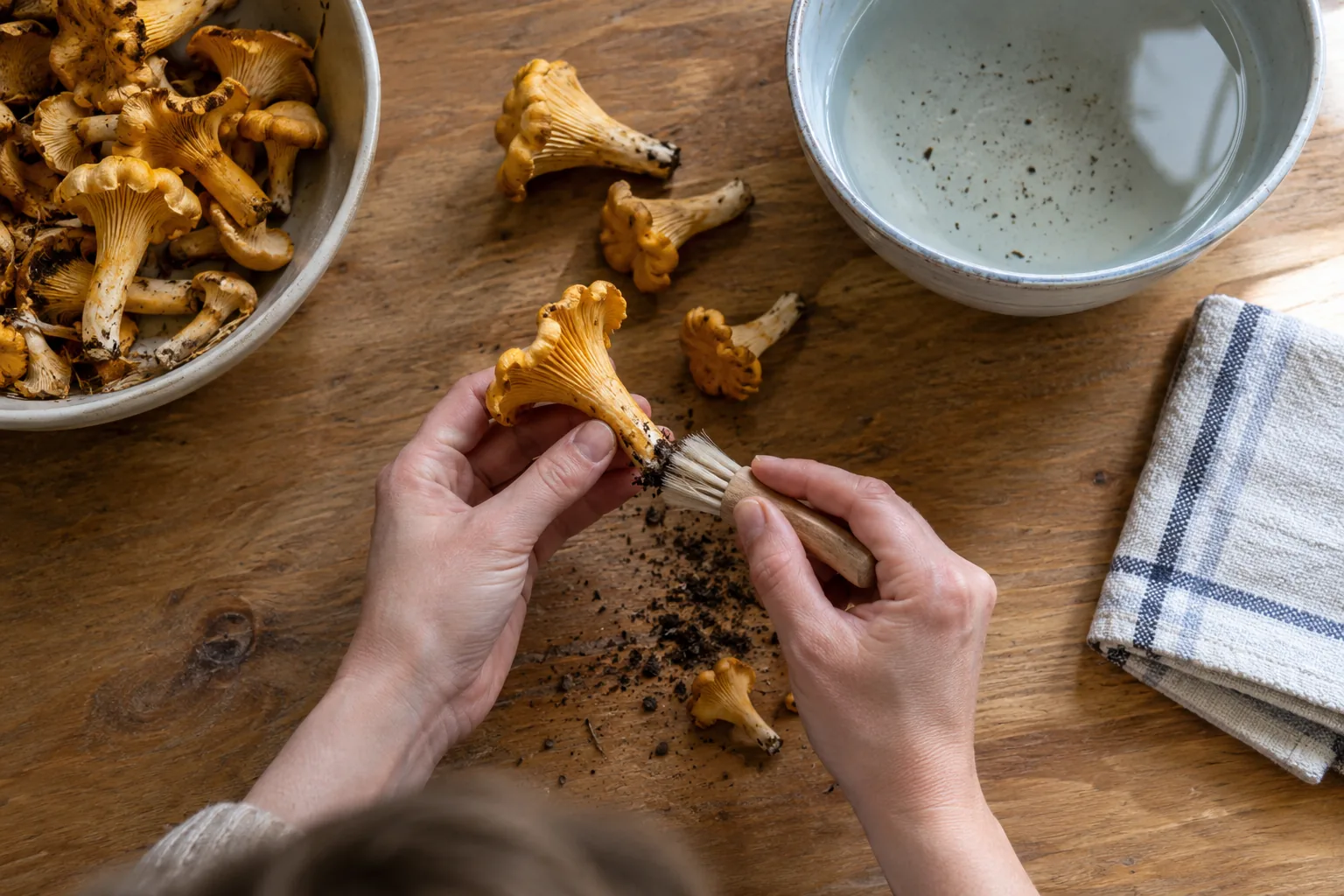
Brush and wipe method, step by step
- Set a clean towel or sheet of paper towel on the counter.
- Brush each cap from the center outward with a soft pastry brush, mushroom brush or clean toothbrush.
- Brush the gills lightly if they hold debris.
- Trim the dry or dark end of the stem with a paring knife.
- Wipe any stubborn spots with a barely damp paper towel.
- Check the cut surface of the stem for soil and trim again if needed.
This works for cultivated mushrooms, because they are grown in a controlled medium and carry less dirt than wild ones. A little brushing is often all they need.
Rinse and spin method for dirty mushrooms
When brushing is not enough, rinse in small batches. Do not soak them in a full sink; keep contact with water short.
- Put the mushrooms in a colander or bowl.
- Run cool or lukewarm water over them while you turn them gently with your hand.
- Lift them out and let the excess water drain.
- Dry them right away, either by patting with a towel or by spinning.
Towels work for a handful. For a larger batch, a salad spinner pulls off surface water by spinning, so the mushrooms are ready to sear rather than steam. Spin in a single layer or a loose pile, since packed mushrooms hold water between them.
CrispVault is a 6.2-quart salad spinner with a bowl, basket and lid. Load the rinsed mushrooms into the basket, set the bowl on the counter so the silicone base sits flat, and press the top pump with one hand. A brake button stops the basket when you are done. The lid comes apart into individual pieces, so you can rinse each part and let it dry after use.
 In this guideCrispVault$119.99View
Field note
After spinning, spread the mushrooms on a dry towel for a few minutes before cooking. Surface moisture that is left behind is what turns a sear into a steam.
Freshly harvested kit mushrooms
Mushrooms from a home growing kit start in a clean medium, so they carry little dirt. Harvest them by twisting or cutting at the base, then trim any growing medium that came away with the stem.
Brush or wipe them with a dry or barely damp towel. Skip the rinse unless you can see debris. Freshly picked mushrooms are often plump and hold moisture, so extra water is harder to cook off. If you do rinse, dry them as described above.
Follow the instructions that came with your kit for which varieties are meant to be eaten. Some varieties, such as the Reishi in the MycoDome kit, are harvested for tea rather than for the pan, so check the care guide before you cook anything.
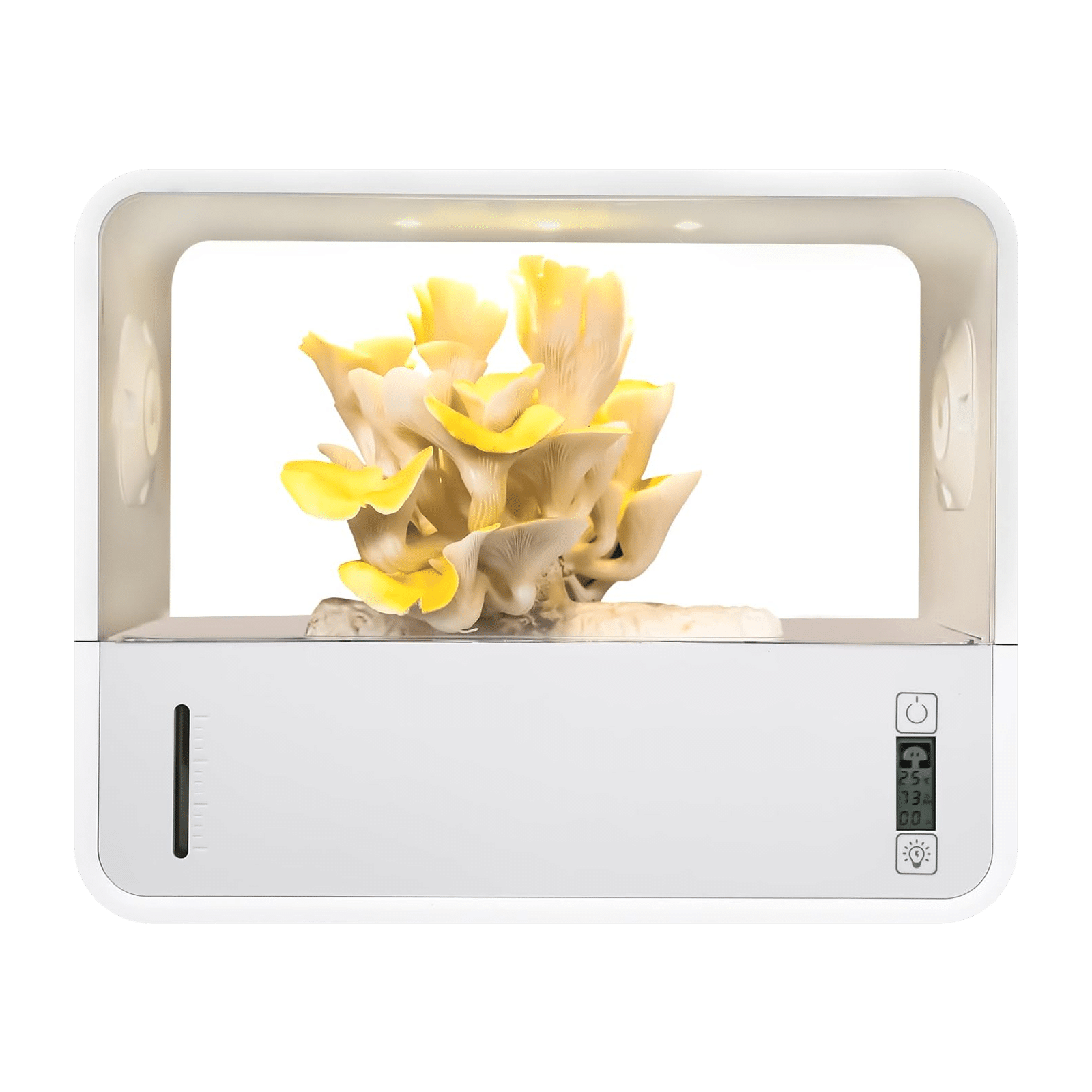 In this guideMycoDome$269.99View
If you enjoy growing food at home, our guide to an indoor herb garden covers a setup that sits well next to a kitchen counter.
Vinegar, baking soda and waterless cleaning
You do not need either additive. Plain cool water, a brush and a towel handle dirt. Vinegar can leave a flavor on porous mushrooms, and baking soda adds a step of rinsing it off, which means more water on the mushroom, the very thing you are trying to limit.
To clean mushrooms without water, use the brush method above, then wipe with a dry paper towel. For stubborn spots, trim the spot away with a paring knife. This works well for cremini, button, shiitake and portobello.
Common mistakes
- Soaking mushrooms in a full bowl for a long time.
- Rinsing and then cooking them still wet.
- Crowding the pan, which traps steam.
- Skipping the stem trim on oyster and shiitake.
- Washing a whole batch you will not cook that day; wash only what you plan to use.
Cutting mushrooms after cleaning
You can wash before or after cutting, but wash first: cut surfaces take on water more readily. Clean, dry, then slice.
For stir fry, trim the stem base, then cut button and cremini mushrooms into slices of even thickness so they cook together. Cut shiitake caps into strips and oyster mushrooms by tearing along their natural lines. Cut portobello into thick strips or cubes.
Keep pieces similar in size and cook them in a hot pan in batches, with space between pieces. If you slice a large amount, the slicing disc on a food processor can do the repetitive work; see our food processor guide for what to look for, or browse the Blenders, Mixers & Prep Tools collection.
Storing cleaned mushrooms
Store unwashed mushrooms in a paper bag or a container lined with paper towel in the refrigerator. If you cleaned more than you need, dry them fully and keep them lined with paper towel, then use them soon.